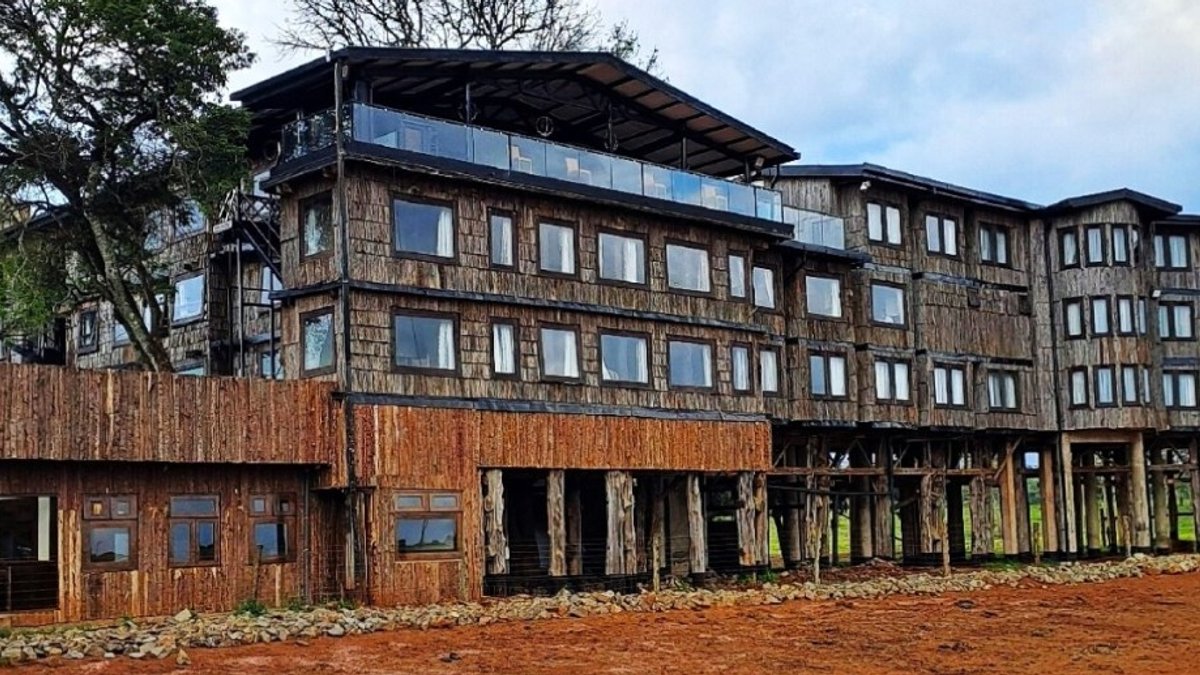
Nyeri’s Treetops hotel in Kenya’s Aberdare National Park has witnessed two of the 20th century’s most key historical moments. In 1952, Princess Elizabeth learned she had become Queen Elizabeth II while staying there. Fourteen years later, Paul McCartney visited the same lodge and conceived the melody for The Beatles’ Sergeant Pepper’s Lonely Hearts Club Band during his time in East Africa.
The hotel’s story began in 1932, when Major Eric Sherbrooke Walker constructed a two-room treehouse for his wife, Lady Bettie. Walker, who owned land in the Aberdare Range, designed it as a safari viewing platform inspired by Indian hunting machans, positioned beside animal trails leading to a waterhole. The construction faced challenges, as laborers were frequently driven off by wildlife, and the project’s costs escalated beyond expectations.
By 1952, when Princess Elizabeth and Prince Philip visited, the structure had grown to four rooms. The princess received news of her father, King George VI’s death on February 6 while staying there. She later returned to Britain to assume the throne, becoming the first modern British monarch to accede outside the country.
Corbett, a Nyeri resident and frequent visitor to Treetops, shared a house with Lord Baden-Powell, founder of the Boy Scouts movement. Baden-Powell’s cottage, Paxtu, still stands on the hotel grounds, and both men are buried nearby. Corbett’s account of the princess’s stay was later published in his 1955 book Tree Tops by Oxford University Press.
Rebuilding After Mau-Mau Destruction
The hotel’s reputation surged after the princess’s visit, but its legacy faced destruction in 1954 when Mau-Mau rebels burned it down during the uprising against British rule. The conflict, which began as a protest in 1951, turned violent after British forces declared the Aberdare forest off-limits to Africans in June 1953. By May 1954, as the rebellion weakened, rebels torched Treetops in retaliation for its use as a military lookout.
After rebuilding near the original waterhole, Treetops became a favored destination for wealthy and famous guests. The hotel maintained its no-see, no-pay policy, a common safari practice where guests were not charged if they failed to spot big game. Observation lounges and photographic hides were added, allowing visitors to watch wildlife at the waterholes, much like Princess Elizabeth had done decades earlier.
Royalty and Rock Legends Shape Legacy
By the mid-1960s, Treetops had expanded to 50 rooms, though its core design—a treehouse above the forest floor—remained unchanged. The lodge’s dual claim to fame, hosting a future queen and inspiring a legendary album, has solidified its place in British and global culture.
The hotel’s location in the Aberdare Range made it a key point during the Mau-Mau Uprising. In late 1953, British forces conducted Operation Blitz, killing 125 rebels in a single operation. The following year, Operation Hammer failed to locate many fighters, as most had already fled the area. The destruction of Treetops in May 1954 marked one of the uprising’s final acts of defiance before the British suppressed the rebellion.
The hotel’s expansion from its original two rooms reflected rising demand for safari lodging. The Walkers had adjusted operations to accommodate overnight guests, though the lodge remained primarily a wildlife viewing platform. The princess’s stay, which included attending a state dinner hosted by Sir Horace Hearne, Chief Justice of Kenya, instantly raised Treetops to an international landmark.
Colonial Figures and Hidden History
The hotel’s connection to Lord Baden-Powell added another layer of historical significance. Paxtu, the cottage he commissioned in 1938 on the Outspan Hotel grounds, became a secondary point of interest for visitors. Baden-Powell, who shared a residence in Nyeri with Corbett, had chosen the area for its strategic location and scenic beauty. His burial site, alongside Corbett and Lady Baden-Powell, lies near the hotel, reinforcing the grounds’ ties to exploration, conservation, and colonial-era figures.
After the Mau-Mau Uprising’s suppression in 1954, Treetops was rebuilt near its original waterhole site, preserving its core design while expanding facilities. The no-see, no-pay policy had already attracted wealthy visitors before the princess’s stay, but her association boosted its prestige. By the mid-1960s, the hotel had grown to 50 rooms, though the treehouse foundation remained, offering the same raised views of wildlife at the waterholes.


