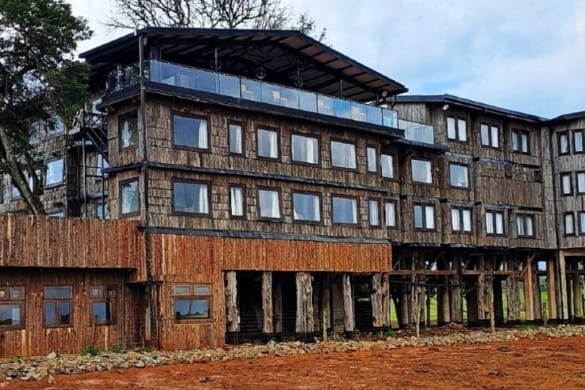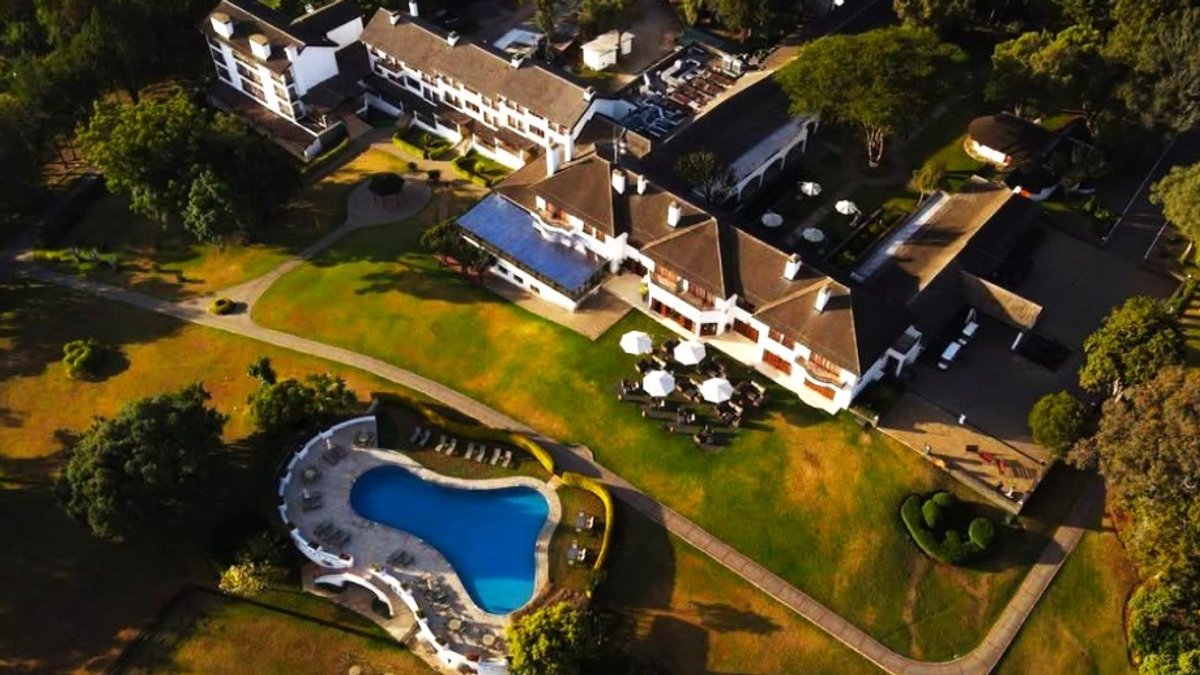
Mount Kenya Safari Club sits at the foot of Africa’s second-tallest peak, where the Equator cuts through its grounds. The remote setting has drawn travelers and dignitaries since the 1930s.
Early History
The estate was originally called Mawingo, a name derived from the Kiswahili word “Mawingu,” meaning clouds, inspired by the surrounding mountain scenery. In the early 1930s American socialite Rhoda Lweinsohn and French aviator Gabriel Prudhomme established a private residence there.
The property’s altitude and proximity to Mount Kenya offered sweeping vistas that appealed to early visitors. Its location at the base of the peak provided a dramatic backdrop for the modest home.
In 1948 hotelier Abraham Block purchased the land and converted the private house into a small country inn, laying the groundwork for future development.
Luxury Transformation
During a hunting safari in the late 1950s, American oil magnate Ray Ryan stopped at the inn after an incident on his expedition. Impressed, he invited companions, including actor William Holden and Swiss financier Carl Hirschmann, to join him.
Read Also: Kenyan hotel linked to Queen’s ascension and Beatles song
In 1959 the trio acquired the property and launched Mount Kenya Safari Club. Contemporary reporting described a 60-room clubhouse, heated swimming pool, Turkish baths, massage facilities and fireplaces. The owners claimed to have invested roughly US$1 million, a sizable sum for the era, and the amenities were promoted as among the most luxurious in East Africa at the time.
The retreat quickly attracted high-profile guests such as Sir Winston Churchill, singer Bing Crosby, hotel pioneer Conrad Hilton, U.S. President Lyndon B. Johnson and Prince Bernhard of the Netherlands, cementing its reputation as an elite sanctuary. Visitors often noted that the view from the lounge framed the snow-capped summit of Mount Kenya on clear mornings.
Conservation Efforts
Holden’s affection for Kenya evolved from hunting to wildlife protection. In 1967 he and friends established a conservation reserve and animal orphanage aimed at safeguarding the endangered mountain bongo, a rare antelope native to the region.
After Holden’s death in 1981, his widow, actress Stephanie Powers, founded the William Holden Wildlife Foundation. The organization has funded environmental education, field trips and sustainable-living programs that connect schoolchildren with the natural world.
Today the site operates as the Fairmont Mount Kenya Safari Club, sharing its acreage with the Mount Kenya Wildlife Conservancy and an animal orphanage. Ongoing projects focus on reintroducing the mountain bongo to its natural habitat, and researchers monitor the herd’s progress each season.