Slow travel continues to rank among the top trends for 2026, yet one of the world’s most visited wonders is still consumed almost entirely as a fast-paced day trip. A 14-hour round trip of trains, buses, and hiking is what happens when most people attempt to explore the iconic Peruvian citadel of Machu Picchu. This creates a paradox: travelers go farthest to give the destination the least time. If there was a better way to experience this site, it would likely involve slowing down the pace of the journey itself.
Reimagining the Itinerary
For those who have not visited the Wonder of the World, the standard itinerary is punishing. Visitors wake before dawn in Cusco, a city sitting at 3,400 meters where altitude sickness is common. They board a bus, then a train winding through the Sacred Valley, and finally another 30-minute bus ride up the switchbacks to reach a timed entry gate. This gate admits a visitor for a single circuit in one direction with no re-entry. By the time a person has settled on how magnificent the site truly is, a guide is already walking them toward the exit and the return train.
The bittersweet element to this routine is that memories are formed during sleep and rest. Travelers would likely want to remember every moment spent at such a place, yet due to the exhausting travel required, they might only remember that they were there through photos on their phones and on Instagram. Conversely, the paradigm of slow travel and preserving wellness throughout the journey implies starting with a good night’s sleep at the mountain rather than commuting to it.
That is where Sumaq Machu Picchu Hotel comes in. The five-star, 62-room property sits in Machu Picchu Town, formerly Aguas Calientes, on the bank of the Urubamba River. It is about eight minutes from the train station and directly on the road to the citadel. The hotel offers a sanctuary next door to the historic site, allowing guests to experience the area without the rush of the daily train schedules.
Accessing Multiple Moments
Sumaq is a family story. Founded in 2007 by the Clavijo Begazo family under Clabe Andina, it is now led by the second generation, Angie Clavijo and Aníbal Clavijo, continuing the work of their father, Don Aníbal Clavijo, who spent more than 35 years in Peruvian boutique hospitality. The name comes from Quechua, the ancient language of the Incas, where “sumaq” means beautiful, pleasant, and harmonious. The name serves as a core mantra to guide the onsite experience and to reflect the level of service, directly conveying a deep sense for how guests should take their time to appreciate the world wonder.
To add another driver for why slow travel is the best way to approach a visit to Machu Picchu nowadays, since June 2024, Peru’s Ministry of Culture has organized the citadel into three circuits and ten routes. Each ticket covers one route in one direction with no going back. Seeing a second circuit requires a second ticket on a different day or time slot—an act that is essentially impossible when a visit is bookended by trains. Staying in town makes it easy to experience different moments of Machu Picchu and see the site from different angles or weather conditions.
For example, most first-timers opt to take Circuit 2B, the classic route through the upper and lower terraces that offers the postcard view below the Guardian’s House. It is recommended to do so in the early morning while the cloud forest is still releasing the mist that gives Machu Picchu its otherworldly reputation. A stay in town would allow visitors to return the following afternoon on Circuit 3A for the lower royalty route and, for those with the legs, the four-hour climb up Huayna Picchu. The same site, viewed from a different mountain in different weather, creates completely different memories. That is the heart of the slow travel experience: a second night converts the whole trip.
Completing the Memory with Culinary Precision
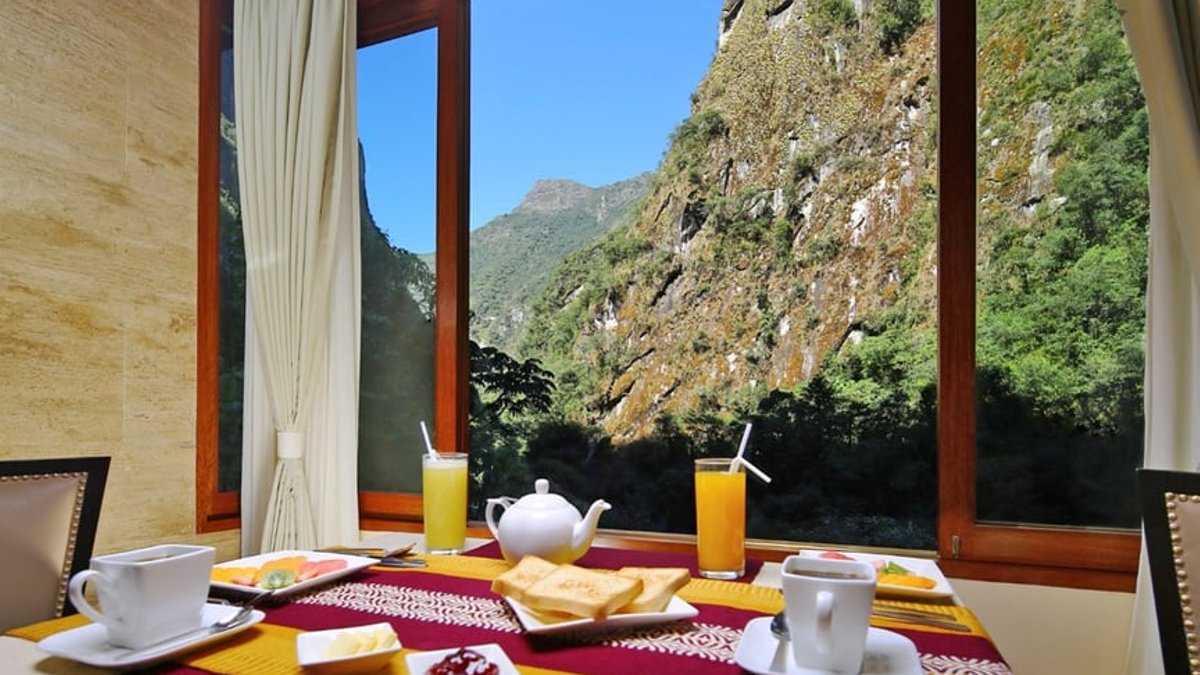
Between multiple visits up the mountain to the citadel, the property offers a place to properly recover. Rooms look out over the river valley and the surrounding peaks for some personal reflection after the daily horde has departed on the last train out of town. Then at Aqlla Spa, treatments draw on Andean hot stones, local honey and native plants including muña and coca leaf, with an Andean Cleansing Ritual using sacred herbs and smoke. Sleeping at 2,000 metres in Machu Picchu Town is also gentler on the body than in Cusco.
Then there is dinner, which may be the most underrated argument for staying. Qunuq Restaurant works from Andean terroir and the region’s remarkable agrobiodiversity, sourcing native potatoes from the community of Huatata where more than 350 varieties are grown, along with Andean quinoa, native cacao and medicinal herbs bought directly from highland farmers at fair prices. For geographic context, Machu Picchu sits where the Sacred Valley highlands meet the Amazon basin, and the kitchen makes full use of both larders, blending them into some European favorites for some unique culinary creations.
Recognizing the Standards
The credentials back the philosophy. Sumaq was accepted into the Considerate Collection of Small Luxury Hotels of the World, which recognizes genuine commitment to sustainability and cultural preservation, and the hotel is in the final steps of B Corp certification with B Lab. It also appears in the MICHELIN Guide’s hotel selection.
Restoring the Body and Savoring the Land
Dinner is a strong argument for staying at the property. Qunuq Restaurant focuses on Andean terroir and regional agrobiodiversity. Guests can book tasting menus like “Flavors of the Andes: Apucc Mikhuna,” which means the food that the mountains bring us. The menu highlights the rich biodiversity and food-driven storytelling of the land. Cooking classes, bar classes, and Pachamanca demonstrations allow guests to learn about the local culinary traditions.